

Few production companies have shaped modern British crime drama quite like World Productions. From Line of Duty and Bodyguard to Vigil and Karen Pirie, the ITV Studios-owned company has created some of the genre’s most distinctive series, exploring police corruption, institutional failures and the darker sides of human nature.
We spoke with Simon Heath, CEO and Creative Director of World Productions, about the return of Line of Duty, the evolution of British crime drama and the challenges of bringing true crime to the screen. Heath also discusses the ethical responsibilities of telling real-life crime stories, the importance of finding fresh perspectives within familiar genres, and the creative choices behind the company’s acclaimed productions.
Line of Duty has become one of the most influential British crime dramas of the 21st century, placing police corruption and institutional accountability at the heart of its storytelling. What do you think has made the series such an international phenomenon, and how has it influenced audiences’ expectations of crime drama?
I think one of the things we set out to do when we developed the show, over 15 years ago now, was to respond to a shift we were beginning to see in crime dramas. Traditionally, you had episodic crime dramas where you’d tune in, the cop would solve the case in an hour, you’d get to know a bit about him, and that was the show. It was a very clear format. But we were seeing a move towards much more serialised storytelling, which meant we could tell a more complex investigative story over six hours. That became the starting point for what we wanted to do, and I think at the time it was relatively new. Now everybody does it. In fact, it’s almost impossible to get an episodic crime drama away.
So that was one influence. Another one was that we just loved the idea of delving into the world of cops from the perspective of cops. The basic idea of cops investigating their colleagues felt very strong to us, and it gave us a way into the subject of police corruption, which is endemic in British policing but, I think, probably resonates in most territories.
Another important thing was making sure the series never became procedural in nature. That term gets bandied about a lot, but for us, it was always going to be a thriller first and foremost. That was crucial. So even though we focused on the minutiae of policing in those interview scenes and the way a case is put together, there was always a thriller pulse running underneath it. That manifested itself most strongly in the world of H and its mythology.
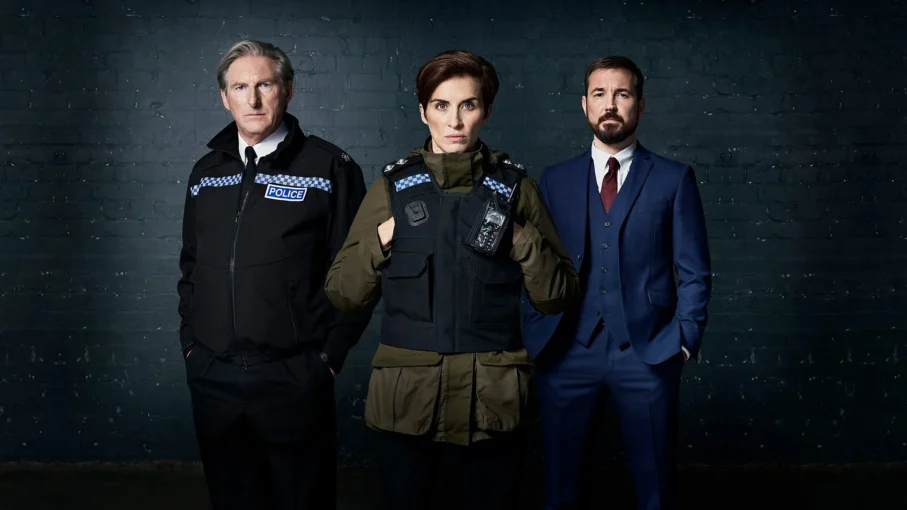
With Line of Duty returning for a seventh season, what does it mean to you personally to revisit such an iconic series? And what excites you most about bringing the cast and creative team back together?
There were a couple of main reasons. First, we felt we had some unfinished business from Season 6 that we wanted to deal with. Some of that was reflected in the audience reaction, while other things were simply stories we still wanted to tell.
In addition, we had to make Season 6 under COVID conditions, which made things quite difficult. In fact, we’d shot four weeks before having to shut down for four months because of the pandemic. It was a difficult shoot, and it didn’t have the same feel as the previous seasons. We wanted the opportunity to do it properly when we came back, under normal production conditions, and to be as ambitious as possible with the action sequences alongside the interview scenes, which have become some of the show’s hallmarks. So we’ve been able to do that as well.
And, of course, a lot has happened in the real world over the past five years, which we felt offered great story material for the show. It was exciting to have the opportunity to explore those subjects as well.
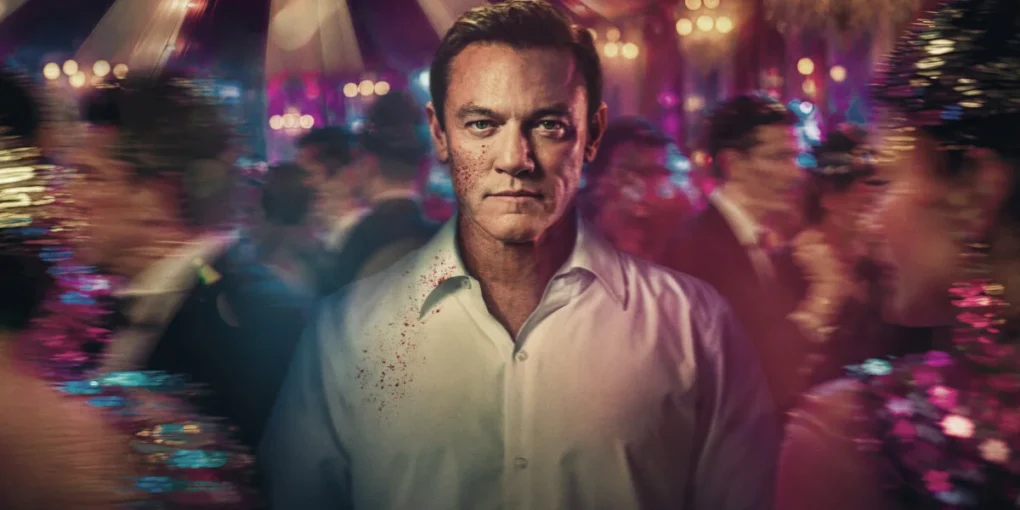
The Party brings together a working-class outsider and a privileged political figure, exploring ambition, loyalty, class and hidden secrets. What drew you to this particular story, and what makes it especially compelling as a psychological thriller?
First of all, I think it’s a very good novel. It has a classic feel to the story, something you might recognise from Brideshead and, maybe more recently, Saltburn. But I think Elizabeth Day, the author of the acclaimed novel, found a new angle on it, and Sarah Solemani,the award-winning writer and creator of the series, then took that and really ran with it. Our aim was to raise the stakes a little from the novel and make sure that Ben and Martin’s relationship was front and centre.
For me, the psychological thriller element comes down to who has done what to whom, and why. Why is this man keeping this other man’s secrets? I loved that aspect, as well as the idea of this enormous party unfolding over five episodes, with the story gradually coming together. It was a real challenge because you’re trying to maintain narrative clarity while also holding back information and deciding when to reveal things. Even during the edit, we were moving things between episodes.
There’s a hook at the end of every episode, and hopefully the viewing figures will reflect that. It’s a very bingeable story; one you can happily sit down and watch all five hours of. I think it’s that combination of the secrets these characters are hiding and the great characters Elizabeth and Sarah have developed together that makes it so compelling.
With The Pembrokeshire Murders and Until I Kill You, World Productions has approached real-life crime from very different perspectives. How has your approach to adapting true crime evolved over the years? And what do you think distinguishes responsible true crime drama from sensationalised storytelling?
I think it’s as much about having a moral and ethical instinct for what is appropriate to include in these shows. In The Pembrokeshire Murders, for example, we didn’t show the murders because we felt that would be too graphic, particularly as the victims’ relatives were still alive. It’s a question of what is appropriate to put on screen as a programme-maker, while also wanting to tell the story of how this exceptional police officer, Steve Wilkins, solved the case in such an extraordinary way. You hope that, in doing so, the drama also becomes a kind of testament to the memory of those victims.
I know the families were really pleased with the series, and I think that, as a producer, when the relatives of the victims are happy with what you’ve done, it means you’ve got something right. That’s one of the things we always try to achieve.
With Until I Kill You, we worked very closely with Delia to tell her story. She survived a serial killer, but was left incredibly traumatised psychologically. We had to find the right balance, and we did that by working carefully with her and respecting what she felt comfortable with showing. Again, she was incredibly happy with the story. She told the writer, Nick, after the screening that it had been cathartic for her in a way. That was fantastic.
We’ve now made around ten true-crime stories, I think. You learn something with each one, and you become better at understanding how to approach them. A great deal of research goes into these projects, along with a lot of care over the choices you make about what to include.
From Line of Duty and Bodyguard to Vigil, Karen Pirie and The Party, World Productions has created some of the most compelling British crime dramas and thrillers. When you first encounter a new project, what makes you feel it has the potential to become something exceptional? And what do you think is the key to creating a crime series that truly captivates audiences?
I’m going to say something quite obvious, really, but you’re always looking for a new spin on something. Sometimes people pitch ideas that are really out there, and you think, “That’s interesting, but I don’t see an audience for it,” or “I don’t think we could make that work.” I often talk about new wine in old bottles. It’s something that might seem like a classic format, but there’s a twist within it.
We get pitched a lot of fairly standard procedural shows, which we’re probably not going to do. But it’s funny: sometimes you get sent something and, as you’re reading, there’s just a moment when you think, “There’s something in this.” Then you start to drill down. But sometimes it’s hard to identify exactly what that something is. That’s why I say that, when it comes to pitching and commissioning, nobody really knows what they want until they see it.
We’re fortunate to be in a position where we get sent a lot of material. It’s a privilege to be able to cherry-pick the projects I’m enthusiastic about, and which I feel audiences might get enthusiastic about too.
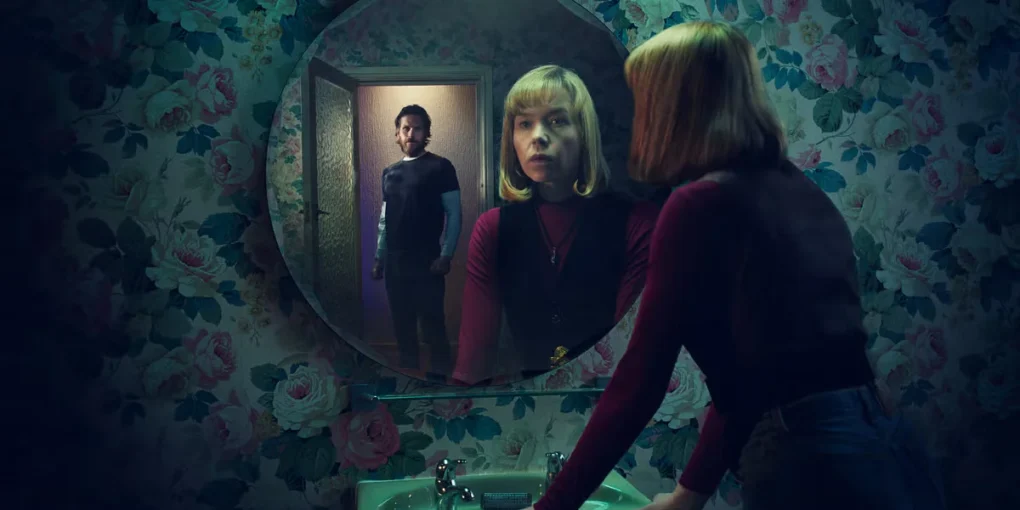
Karen Pirie uses cold cases to revisit crimes from the past, often revealing the prejudices and institutional failures of earlier decades. How important is this relationship between past and present to the series? And what makes Karen Pirie such a distinctive detective in British crime fiction?
I’d always been quite interested in cold-case dramas, and then the rights to Val McDermid’s novel became available. I loved the fact that, at the heart of this story, there was a relatively young Scottish woman who was overlooked. I thought that was a great way into crimes that had never been solved. You’ve got all these men who have tried to solve these crimes, and then this young woman comes in and solves them.
I also loved the opportunity to revisit a particular period in time and recreate it with real care. Season 1 was set in the mid-90s, with Britpop and Euro 96, while Season 2 took us back to the miners’ strike. Season 3 is going to be set against the backdrop of the Balkan Wars, as it’s based on the third book in Val’s series. We’re going even more international this time, with part of the story taking place in Croatia.
I think the challenge for Karen gets bigger each time, and that’s what will enable the show to sustain and grow. The stories have expanded a little further with each season, and this is definitely the most complex case she’s had to solve yet.